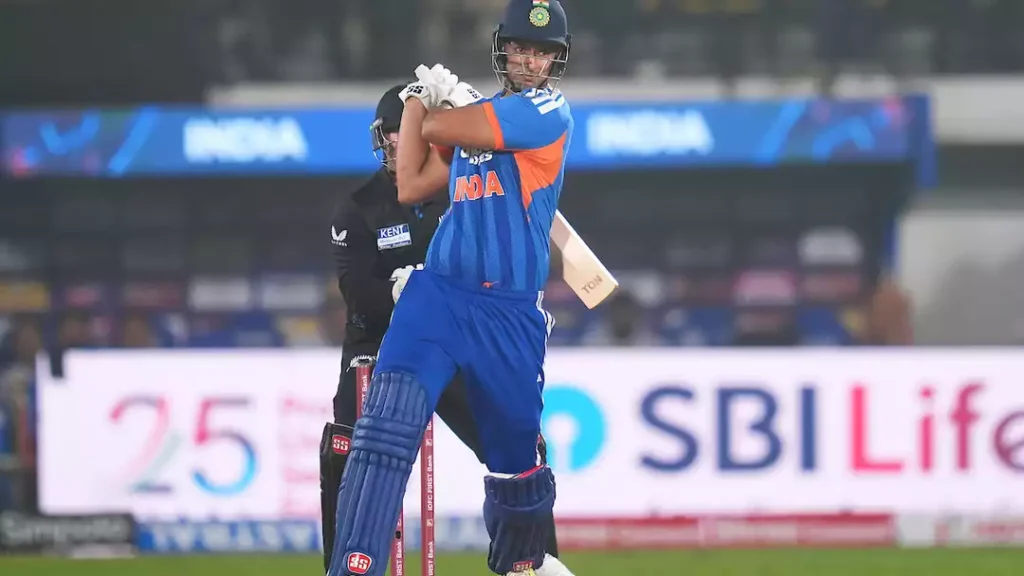
Shivam Dube’s explosive knock during India’s experimental T20I match in Visakhapatnam highlighted how far his game has progressed, as he stood out as the lone bright spot in an otherwise faltering chase.
What India’s Experimental Night Revealed About Shivam Dube
India’s experimental approach on a low-key T20I night ended in defeat, but it quietly revealed something important about Shivam Dube’s growing role in the team.
Walking in early during a difficult chase, with India short on batting depth and conditions offering little margin for error, Dube was left with a clear responsibility — keep the chase alive. What followed was the only sustained resistance India managed.
Dube attacked spin with authority, bringing up a rapid half-century and briefly shifting the momentum. His 15-ball fifty became India’s third-fastest in T20 internationals, a reminder of the impact he can make in the middle overs.
More telling than the runs themselves was the opposition’s response. Instead of relying solely on pace — once considered Dube’s weakness — the bowling side continued to challenge him with spin, acknowledging the evolution in his batting.
India’s night was shaped by experimentation. A shortened batting line-up, unfamiliar roles, and the absence of dew exposed flaws early. By the time Dube arrived at the crease, the asking rate was climbing and support was limited. Yet, while he was batting, the chase remained alive.
Dube finished with 65 off just 23 balls, scoring freely against both spin and pace. While spin remained his primary strength, his ability to collect runs off faster bowlers ensured the opposition couldn’t shut him down with a single plan.
Speaking after the game, Dube pointed to clarity of role and repetition as key factors behind his improvement. Regular opportunities, he said, have helped him better understand match-ups and situations — both as a batter and an all-rounder.
Ironically, despite his growing bowling responsibilities in recent months, he didn’t bowl on the night. The experiment was focused elsewhere. Still, the message was clear.
The result may not have gone India’s way, but the evening offered valuable insight. Dube is no longer a player opponents wait to expose. He is one they actively plan for — and that shift may prove more significant than the outcome of a single match.