The 2026 edition of the Women’s Premier League has already delivered plenty of talking points. From an explosion in six-hitting to dramatic batting recoveries and bold tactical calls like retired outs, the tournament so far has reflected an evolving and increasingly aggressive brand of women’s T20 cricket. Here’s a detailed look at the major trends and standout features from WPL 2026 to date.
Chasing remains the preferred option at the toss
The toss continues to play a decisive role in the WPL, with captains overwhelmingly opting to chase. The last instance of a team choosing to bat first after winning the toss dates back to the 2024 final in Delhi, where Delhi Capitals eventually lost to Royal Challengers Bengaluru. Since then, across 33 matches spanning WPL 2025 and 2026, captains have consistently backed chasing — and the results largely justify that choice.
In WPL 2026 alone, six of the first 11 matches have been won by the team batting second. Delhi Capitals came close to adding another chasing win when pursuing 210 against Gujarat Giants, only to stumble in the final over against Sophie Devine. Venue-specific trends further highlight how crucial this decision has become, particularly in Navi Mumbai, where targets above 180 have proven difficult to defend.
At DY Patil Stadium, teams defending totals under 180 have been unbeatable, while higher targets have largely failed. A similar pattern is expected to continue in the second half of the season at the BCA Stadium in Vadodara, where every WPL match played in 2025 was won by the chasing side. Overall, since the start of WPL 2025, 21 of 33 matches have gone the way of the team batting second, underlining a clear tournament-wide trend.
Scores climb and sixes flow freely
One of the most striking aspects of WPL 2026 has been the sharp rise in run-scoring. The average first-innings total, which stood at 157 in 2023, 164 in 2024, and dipped to 153 in 2025, has surged to 177 this season. This jump reflects not only flatter pitches but also a more fearless batting mindset.
The numbers tell a compelling story. Strike rates are up, the frequency of half-centuries has increased, and six-hitting has reached unprecedented levels. In 2026, a six is being hit every 21.2 balls, compared to 30-plus balls in the first two editions. The boundary percentage has also risen significantly, indicating a conscious effort by batters to maximize scoring options.
Overseas batters dominate the charts
Another clear pattern is the dominance of overseas players with the bat. Of the 21 fifty-plus scores recorded in WPL 2026 so far, 15 have come from overseas batters. Indian players have chipped in more recently, especially during the Navi Mumbai leg, but the overall contrast remains stark.
Overseas batters are striking at over 150 this season, a sharp rise compared to previous editions, while also averaging nearly 35 per innings. Their ability to clear the ropes has been particularly telling, with a balls-per-six ratio of just 18.5 — a massive improvement from earlier seasons. Indian batters, by comparison, have struck at just over 131 and taken nearly 25 balls per six, highlighting the gap in power-hitting output.
Pace bowlers gain the upper hand
In contrast to earlier seasons where spin dominated, WPL 2026 has seen seamers emerge as the more influential bowling group. Pace bowlers have been more effective across most metrics, including average, strike rate, and dot-ball percentage. Their impact has been especially pronounced in the first innings, where they have struck more frequently and kept run rates in check.
Spinners, meanwhile, have struggled to exert the same level of control, particularly in the first half of matches. While they have shown marginal improvement in second innings, their overall economy and wicket-taking ability lag behind that of the pacers. Interestingly, the two teams most reliant on spin-heavy attacks currently find themselves at the lower end of the points table, despite boasting high-quality spin options.
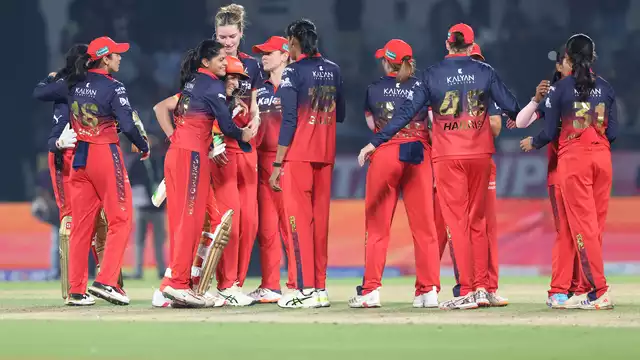
Royal Challengers Bengaluru’s success, in contrast, has been built around strong new-ball performances from their pace unit, reinforcing the value of seam bowling in this season’s conditions.
Remarkable batting recoveries steal the spotlight
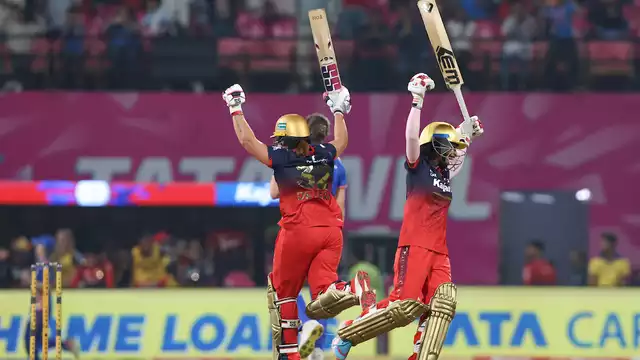
If WPL 2026 has been about power, it has also been about resilience. Several matches have featured stunning batting recoveries from seemingly hopeless positions. The tournament opener saw a dramatic turnaround when RCB chased down 155 after slumping to 65 for 5. More recently, a blistering counterattack led Delhi Capitals to a competitive total after collapsing to 10 for 4 inside two overs.
What makes these recoveries even more impressive is that they have come despite pace bowlers striking more often in the powerplay than in previous editions. Middle-order and lower-order batters have stepped up, scoring faster and building stronger partnerships than ever before. The average fourth-wicket (or lower) partnership has risen significantly, both in terms of runs and scoring rate, reflecting improved depth and confidence.
Retired outs: bold move, mixed results
One of the more intriguing tactical developments has been the use of retired outs. Across men’s and women’s T20 cricket in 2026, there have already been eight such instances, two of them in the WPL. The outcomes, however, have been mixed at best.
In one case, Gujarat Giants retired a struggling batter to introduce a power-hitter, which resulted in a late surge but did not change the match result. In another, UP Warriorz made a similar call that backfired spectacularly, triggering a collapse in the death overs and ultimately costing them the game.
Overall, only two of the eight retired-out decisions in T20s this year have ended in victories, suggesting that while the tactic is bold, it remains a high-risk gamble rather than a proven match-winning strategy.
A tournament evolving rapidly
Taken together, these trends paint the picture of a league in rapid evolution. WPL 2026 has been louder, faster, and more unpredictable than its predecessors. Bigger scores, bolder tactics, and deeper batting line-ups have reshaped how matches unfold, while traditional assumptions — like spin dominance — have been challenged.
As the season progresses, it will be fascinating to see whether these patterns hold or whether teams adapt once again. One thing, however, is already clear: the WPL is no longer just growing — it’s transforming.