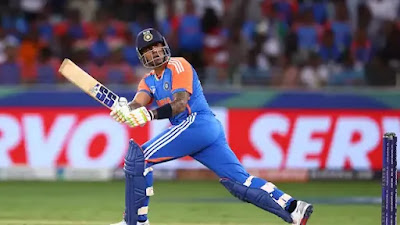
When Suryakumar Yadav says he is “out of runs, not out of form,” he is leaning on a familiar cricketer’s distinction—one that separates poor returns from deeper technical trouble. On the surface, it reflects confidence. But a closer examination of his numbers over the last 15 months suggests that the line between the two has become increasingly blurred.
Between his international debut in 2021 and late 2024, Suryakumar redefined T20 batting. Few players in the world could manipulate fields and bowling plans the way he did. His scoring was not only prolific but disruptive, forcing captains to abandon conventional tactics. He thrived on unpredictability, scoring freely behind square on the leg side while remaining just as dangerous over extra cover if bowlers strayed outside off.
That version of Suryakumar—one capable of leaving even seasoned teammates in awe—feels distant now. Since November 2024, his output against pace bowling has fallen sharply. In that period, 18 of his 19 dismissals have come against seamers. His average against pace has dropped to just over eight, with a strike rate below 110—numbers that are a stark contrast to his prime years.
The manner of those dismissals is even more revealing than the figures themselves. Most have been catches in the deep, the result of attacking strokes rather than defensive errors. This challenges the idea that he is merely short of luck. Instead, it points to intent being divorced from control—an especially risky mix in T20 cricket, particularly early in an innings.
Thirteen of those dismissals have come within his first ten balls, a phase in which he has faced close to 80 percent seam bowling at the international level during this period. Compare that with IPL 2025, where the story was markedly different. Batting largely at No. 3 or 4, Suryakumar registered 16 consecutive scores of 25 or more and was never dismissed inside his first ten deliveries. The reason lay in the bowling he faced: a near-even split between pace and spin early on, allowing him to settle before accelerating.
In international cricket, that cushion has rarely existed. Since November 2024, India have played the bulk of their T20Is against SENA opposition—teams that lean heavily on pace even through the middle overs. Time and again, Suryakumar has walked in to face hard lengths and high pace during his most vulnerable phase, creating a difficult environment to regain rhythm.
Still, context alone doesn’t explain everything. There has also been a noticeable change in his shot selection. Before October 2024, around 16 percent of his first ten balls against pace were hit in the air. Since then, that figure has jumped past 23 percent. More concerning is the drop in control: from managing over 85 percent of aerial shots earlier, he is now in control of barely half of them. In simple terms, he is going harder, earlier—and succeeding less often.
Bowlers have adapted accordingly. Slower deliveries and cutters have become a key weapon, accounting for several of his dismissals. Rather than offering pace he can work with, opponents are taking speed off the ball, tempting mistimed hits and trusting boundary riders. For a batter whose game relies on rhythm and bat speed, these early pace-off deliveries have been particularly disruptive.
Perhaps the clearest sign of decline lies in the erosion of his strongest scoring areas. The leg-side region behind square—once his signature zone—has seen his average against pace collapse from nearly 60 to under eight since late 2024. Shots that once defined him, such as the flick and the on-the-up drive, have gone from high-reward options to repeated sources of dismissal.
None of this means Suryakumar’s talent has faded or that his best years are over. His IPL performances show that his creativity and instincts remain intact when conditions allow him a brief settling period. The upcoming series against New Zealand and the early stages of the T20 World Cup present an opportunity for recalibration. If he finds that balance again, the destructive version of Suryakumar Yadav—the one that changed how T20 batting was played—may yet re-emerge.