South Africa’s relationship with World Cups has never been simple, which is reason enough to avoid predictions or familiar debates about whether this might finally be “their year.” Those conversations rarely add insight and usually end the same way. For now, restraint feels appropriate.
Yet something different is in the air.
It may stem from South Africa reaching the final of the last T20 World Cup. Or from the fact that expectations are noticeably lower this time. Perhaps it’s because the long-term focus remains fixed on the 2027 World Cup on home soil. Or maybe the glow of a successful SA20 season still lingers — a reminder that domestic crowds have lately been louder than those for international fixtures, as seen when West Indies toured earlier this week.
Whatever the cause, South Africa are heading to India without the weight of expectation pressing down on them. Public sentiment appears settled, even accepting. And interestingly, a similar calm surrounded the team when they travelled to Lord’s last June for the World Test Championship final.
This squad isn’t arriving on hope alone. It’s moving forward smoothly, like a well-tuned machine easing through its gears.
Fitness concerns that once loomed have eased. David Miller and Lungi Ngidi have come through groin and knee problems. Quinton de Kock looks revitalised, playing with a sense of freedom that suggests genuine enjoyment. Dewald Brevis continues to edge closer to fulfilling his promise, while Kagiso Rabada remains as threatening as ever, even if the statistics don’t always reflect his impact.
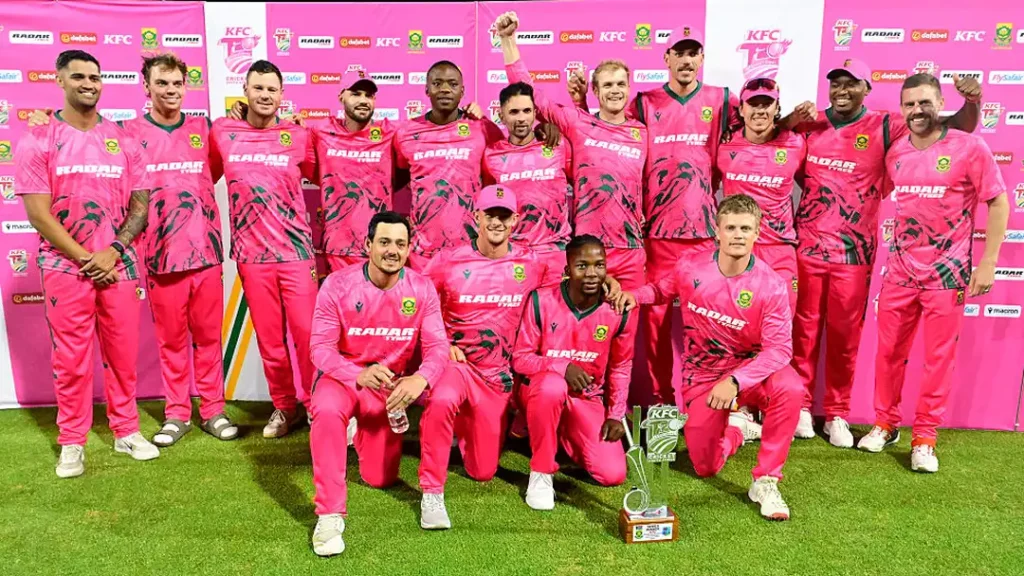
South Africa comfortably won the T20I series against West Indies in Paarl and Centurion before falling just six runs short in a rain-shortened, lightning-lit shootout at the Wanderers. Even that defeat felt encouraging. With Miller unavailable, the margin might easily have swung the other way.
There were personal highlights too. Aiden Markram threatened a century in the opening match but ran out of deliveries. De Kock had no such trouble in Centurion, striking a fluent 115 from 49 balls — all with a borrowed bat, after realising his own were still at home in Knysna. Brevis’ contributions during the series were modest, but his century in the SA20 final remains fresh and telling.
From a bowling perspective, Keshav Maharaj finishing as the leading wicket-taker is an encouraging sign for conditions in Asia. George Linde’s economy throughout the series also stood out, offering control that could prove valuable later.
Markram, who prefers to deliver his motivational messages behind closed doors, has so far struck a measured tone. Ahead of a warm-up clash against India in Navi Mumbai — a fixture that rarely feels routine — he emphasised composure over hype.
“There’s confidence to take from the West Indies series,” Markram said. “And from the SA20 as well, where players stepped up and won games. That’s what you need in a World Cup.”
Excitement, he suggested, needs to be balanced. “You don’t want to make it bigger than it is. There’s a job to do. If you approach it in the right frame of mind, you give yourself a chance.”
That realism extends to squad versatility. Markram, along with Tristan Stubbs and Brevis, could all contribute with the ball if conditions demand it — an intriguing possibility given their limited bowling exposure at international level. How they handle that responsibility, should it arise, will be one of the quieter subplots of the tournament.
Then there is Jason Smith. Like Markram and Rabada, he was part of South Africa’s Under-19 World Cup-winning side in 2014. Unlike them, his senior international career has been sparse. Yet Smith has carved out a role that doesn’t rely on big scores. His late-order hitting against West Indies, when South Africa were wobbling, briefly revived a fading chase.
“That’s exactly why he’s in the squad,” Markram explained. “He walks in when it’s tough to score and can still change the game. He did that for us.”
Closing out matches when it matters most has long haunted South Africa. But since that landmark victory at Lord’s, something seems to have shifted. Maybe that’s why this World Cup feels different — not louder, not heavier, but calmer.
Not driven by hope alone. More like quiet confidence, steadily building.