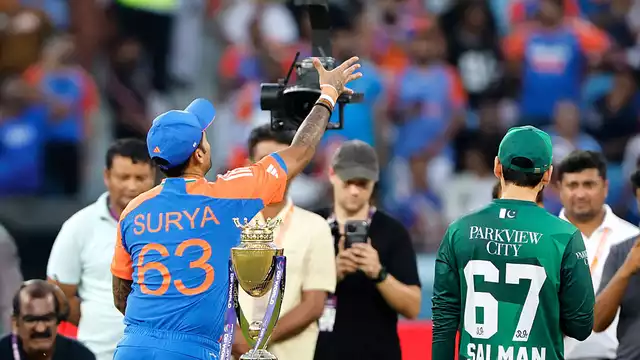
Pakistan India World Cup match uncertainty appears close to resolution as the ICC-Pakistan standoff awaits final approval from Prime Minister Shahbaz Sharif.
The long-running impasse between International Cricket Council and Pakistan appears to be approaching a decisive moment, with signs pointing towards a possible softening of the Pakistan Cricket Board’s earlier threat to skip the February 15 World Cup match against India.
Pakistan India World Cup Match Nears Final Decision
Following an extended tripartite meeting in Lahore involving officials from the ICC, PCB and Bangladesh Cricket Board, the issue is understood to have reached the office of Shahbaz Sharif. The Prime Minister’s approval is now seen as the final step before clarity emerges.
Sources suggest Sharif is expected to confer with PCB chairman Mohsin Naqvi later in the day, after which a formal announcement — either from the ICC or the PCB — could be made. With less than a week remaining before the scheduled fixture in Colombo, any further delay risks becoming counterproductive. Fans and stakeholders require time to finalise travel arrangements for what remains one of the tournament’s most anticipated matches.
The ICC, it is understood, has stood firm in its position that Pakistan lacks sufficient grounds to demand concessions and must honour the Members Participation Agreement it signed in December 2024. That agreement outlined a hybrid hosting model, allowing India–Pakistan matches to be staged at neutral venues — an arrangement designed specifically to address political sensitivities.
PCB, BCB push for broader concessions
Speculation around the PCB’s demands has circulated widely, and some reports appear accurate. Among them is Pakistan’s push for the resumption of bilateral cricket with India — not only for itself but also for Bangladesh. In addition, both the PCB and BCB are believed to have floated the idea of a tri-series involving India.
What remains unclear is how many of these proposals were entertained. The ICC, however, does not have the authority to guarantee bilateral or tri-nation series involving India. Such decisions rest solely with the Board of Control for Cricket in India and, by extension, the Government of India. While India and Bangladesh are scheduled to play a bilateral series in September, ongoing diplomatic tensions mean uncertainty continues to loom over that tour.
Any final resolution is expected to involve compromise. Throughout the negotiations, the ICC has prioritised procedural consistency and dialogue over confrontation. Despite criticism from sections of Pakistan’s media and allegations of bias, the global body has largely maintained an accommodating stance, continuing discussions with all stakeholders, including Bangladesh.
ICC deputy chair Imran Khwaja was present in Lahore, while UAE board director Mubashir Usmani participated remotely. Much of the negotiation, however, has taken place behind closed doors in Dubai and Mumbai, where ICC officials have been working intensively to manage both the immediate dispute and the broader demands of the ongoing World Cup.
The prolonged uncertainty has already added to the tournament’s logistical strain. Thousands of fans — many of whom have purchased tickets and booked travel — remain in limbo as they await confirmation. With the clock ticking, a decision now appears inevitable, one way or the other.