Ishan Kishan struck his maiden T20I century to dominate the spotlight on a night meant for Sanju Samson, leading India to a series-clinching win in Thiruvananthapuram on Friday.
Everything about the evening pointed in one direction.
Long before the toss, Thiruvananthapuram had made its choice. Banners were raised, cut-outs stood tall, and the build-up through the week carried a single expectation: this was meant to be Sanju Samson’s homecoming. His first international appearance in his hometown felt overdue, and the atmosphere suggested the night would revolve around him.
Instead, it found a different centre.
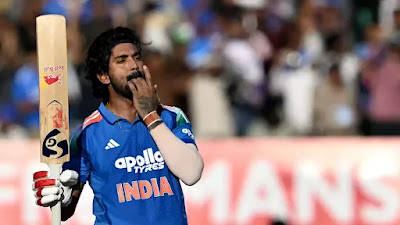
Ishan Kishan didn’t ease his way into relevance — he seized it outright. His maiden T20I century, a blistering hundred off just 42 balls, reshaped the evening in one decisive stretch. The innings was clean, relentless, and commanding, leaving little space for shared narratives. The crowd responded instinctively, applauding the shots, the celebration, and the inevitability of what was unfolding, even if their anticipation had been tuned elsewhere.
By the end, the shift was unmistakable.
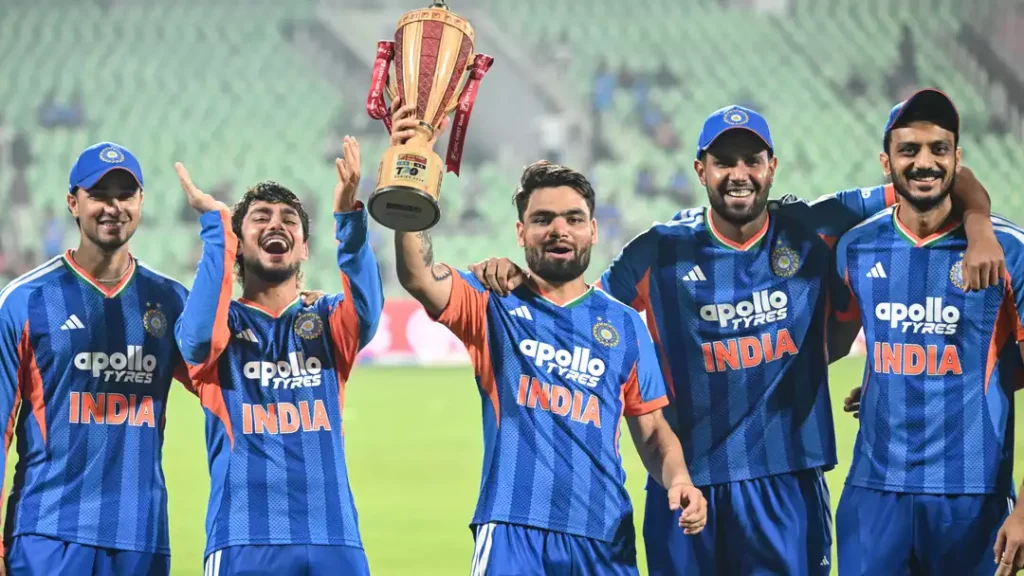
As captain Suryakumar Yadav received the series trophy, he followed a familiar ritual — walking toward the group, pausing, and handing it to Kishan. It was a gesture layered with meaning. Since the days of MS Dhoni, the trophy handover has often been symbolic, passed to someone stepping into the spotlight for the first time. Virat Kohli carried that tradition forward. Rohit Sharma continued it.
But Kishan wasn’t a newcomer. And that was precisely the point.
His international journey had begun years earlier, back in 2021, when India defeated England in a T20I series. He had lifted trophies before. This time, though, it felt different. Not like an introduction, but a reinstatement. Less about arrival, more about return.
In the years between, Kishan hadn’t disappeared — he had simply slipped out of rhythm. After travelling to South Africa as India’s Test wicketkeeper in late 2023, he withdrew citing personal reasons. What followed was an uneasy period marked by questions around availability, domestic commitments, and intent. Injuries interrupted momentum. Silence filled the gaps. And gradually, it became clear how unforgiving the climb back into this Indian team can be.
It was domestic cricket that reopened the door. Leading Jharkhand to their first Syed Mushtaq Ali Trophy title, Kishan amassed 517 runs in 10 innings to finish as the tournament’s leading scorer. The numbers were too loud to ignore. So was the intent behind them.
Once back in national colours, the signs were immediate. A rapid 76 in Nagpur. A sharp cameo in Guwahati. And then this — a hundred in Thiruvananthapuram, on a night that had been scripted for someone else.
It might seem like Kishan hijacked the spotlight. In truth, he simply stepped into the moment when it finally presented itself.
As Kishan stood at the centre of the post-match gathering, trophy raised on behalf of the team, Samson lingered on the edge of the frame — a visual that mirrored the evening itself.
When Samson walked out to open, the reception was thunderous. This was the stage he had waited for. But once the pace ramped up, familiar discomforts resurfaced. Lockie Ferguson hurried him, and a catch at third man ended the moment sooner than anyone had hoped.
Kishan, entering in his place, chose a different response. He began cautiously — just a single from his first five balls — reading the conditions, steadying himself. When the slower deliveries came, he was ready. One threaded through the infield, another lifted cleanly over it. Against spin, anything fractionally short was punished. Anything floated was met with full intent.
Where Samson had looked rushed, Kishan appeared composed. He matched Abhishek Sharma stroke for stroke, dictating terms rather than reacting to them.
The contrast was unavoidable. Two wicketkeeper-batters, similar in skill, competing for the same space with a home World Cup approaching. The stage had been set — just not for the man everyone expected.
As the innings progressed, Kishan even took charge behind the stumps, directing the field. Samson, no longer wicketkeeping, drifted outward — first to cover, then deeper — gradually moving away from the heart of the contest.
When the match ended, Samson walked in last, the applause now reserved for someone else. It was a quiet moment, heavy in its simplicity.
In its own way, the night still belonged to Sanju Samson — not because he owned it, but because he had to watch it unfold from the margins. An evening designed for him became a reminder of a familiar truth in sport: that timing, as much as talent, decides who gets to stand at the centre when the lights are brightest.