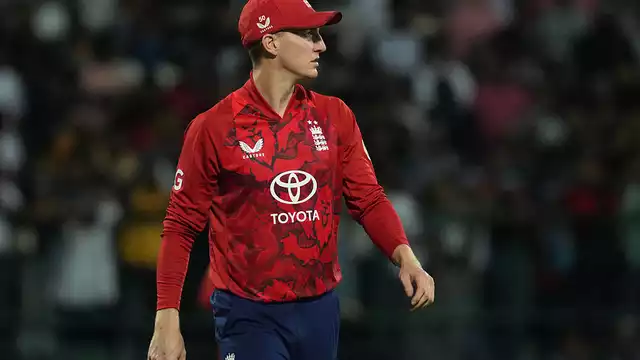
English cricket has been living through a period of upheaval, and Harry Brook has found himself right at its centre. The controversies, the headlines, the relentless scrutiny — all of it surrounded him as England’s Ashes campaign collapsed barely a month ago. Now, at 26, Brook carries a very different responsibility. He leads England into their first ICC tournament under his captaincy, with the echoes of recent turmoil still present and the glow of England’s once-dominant white-ball era noticeably dimmer.
For years, England’s focus was narrow and relentless: could Bazball conquer Australia? That question has now been answered, firmly and painfully. The shift is unavoidable. England must pivot back to white-ball cricket — a space where aggression once came naturally, where they dictated tempo, lifted trophies, and forced opponents to follow their lead.
That dominance, however, belongs to the past. Since Melbourne in 2022, England’s white-ball results have faltered. Early exits at the 2023 ODI World Cup and the 2025 Champions Trophy raised doubts, while even a semi-final appearance at the 2024 T20 World Cup felt strangely flat. The cumulative effect was the early end of Jos Buttler’s captaincy, despite his status as England’s finest white-ball batter.
Brendon McCullum’s expanded role into the limited-overs setup promised continuity and courage, though the initial returns were mixed. There have been signs of revival since, but the glare has not softened. Brook has been captain for nearly a year now, and England need evidence that this generational handover is more than symbolic. For Brook, the paradox is striking — carrying the weight of England’s transition may actually free him from the pressure of being just Harry Brook, the batter.
Squad depth and subtle concerns
England arrive with a batting group that runs deep and hits hard — always a reassuring foundation in T20 cricket. Explosive options throughout the order mean opponents are rarely allowed a breather. Spin, too, is well covered, with England able to deploy a leg-spinner, a left-arm option, and an off-spinner depending on match-ups.
Balance, though, comes with a caveat. A likely split between pace and spin keeps the XI flexible, but it places responsibility on Jamie Overton to operate as a consistent second seamer alongside Jofra Archer. If there is a vulnerability, it lies in the heavy reliance on Archer as the primary pace threat.
Momentum building quietly
England have not consistently fielded their strongest T20I side since last year’s tour of India, where they suffered a 4–1 series defeat. Much has changed since then — most notably the captain and several key personnel. Yet, unlike their ODI counterparts, England’s T20 unit has gathered momentum with little noise.
Over the past year, they have won 10 of the 11 T20Is that produced a result, registering victories against South Africa, West Indies, Ireland, New Zealand and Sri Lanka. Particularly encouraging were the recent wins in Sri Lanka, on surfaces likely to resemble those used in the Super Eight stage. Those performances offer reassurance that England’s form can travel.
A fearless philosophy — with trade-offs
No team scores quicker in T20 cricket right now. Since the last World Cup, England’s batting run-rate of 9.83 is the highest among all competing sides. Their bowling economy, at 9.16, sits at the opposite extreme. Together, those numbers neatly summarise England’s strengths and risks.
The Manchester T20I against South Africa last September captured this identity perfectly. England tore into the bowling to amass 304 — the highest total ever posted against a Full Member — a brutal reminder of how overwhelming this batting line-up can be.
Questions will always remain about how this order copes against elite spin, but England have prepared for match-ups. An abundance of all-rounders provides tactical flexibility, while left-handers across the top six help manipulate angles and conditions. Each batter arrives with a role and a narrative.
Jacob Bethell’s rapid rise signals the next phase of England’s batting cycle. Sam Curran’s journey is one of reinvention. After forcing his way back through a standout Hundred campaign, he dominated the franchise winter — ILT20 champion and top scorer, followed by a productive BBL stint. Once England’s death-overs enforcer in 2022, Curran is now primarily valued for his batting, his bowling used more selectively — a reflection of how England’s needs have evolved.
The instant game-changer
Few players can tilt a T20 contest faster than Phil Salt. Four international hundreds, one of them reached in just 39 balls, and a career strike rate north of 166 underline his impact. Ranked second in the world and openly chasing the top spot, Salt often needs only a handful of deliveries to ensure England dominate the PowerPlay — a phase that frequently defines the match.
Conditions and scheduling
England’s group matches will be played on India’s truer surfaces in Mumbai and Kolkata, environments well suited to their batting power. The Super Eight phase then shifts to Sri Lanka, where slower pitches may demand greater control and patience. How swiftly England adapt from free-flowing aggression to calculated precision could determine how deep their campaign runs.
Group fixtures
- February 8: vs Nepal – Mumbai
- February 11: vs West Indies – Mumbai
- February 14: vs Scotland – Kolkata
- February 16: vs Italy – Kolkata
Potential pitfalls
England’s World Cup history against fellow European sides carries warnings. The Netherlands have beaten them twice at T20 World Cups, and Ireland stunned them during the 2022 title-winning campaign. Scotland remain an unknown variable — England have never faced them in a T20I, and their previous meeting at a World Cup was washed out.
Yet memories linger. The last completed fixture between the sides, an ODI in 2018, ended in a Scottish upset. England know better than most that history has a habit of resurfacing at inconvenient moments.
Defining success
For a squad packed with match-winners and two T20 World Cup titles in its past, expectations remain high. Anything short of a semi-final would feel like falling short. Reaching the final would validate the direction of travel. Winning it all would do even more — silencing doubts around Brook’s leadership and elevating him instantly into a different tier within English cricket.